
What Are Media Servers? A Complete Guide to Streaming Your Content at Home
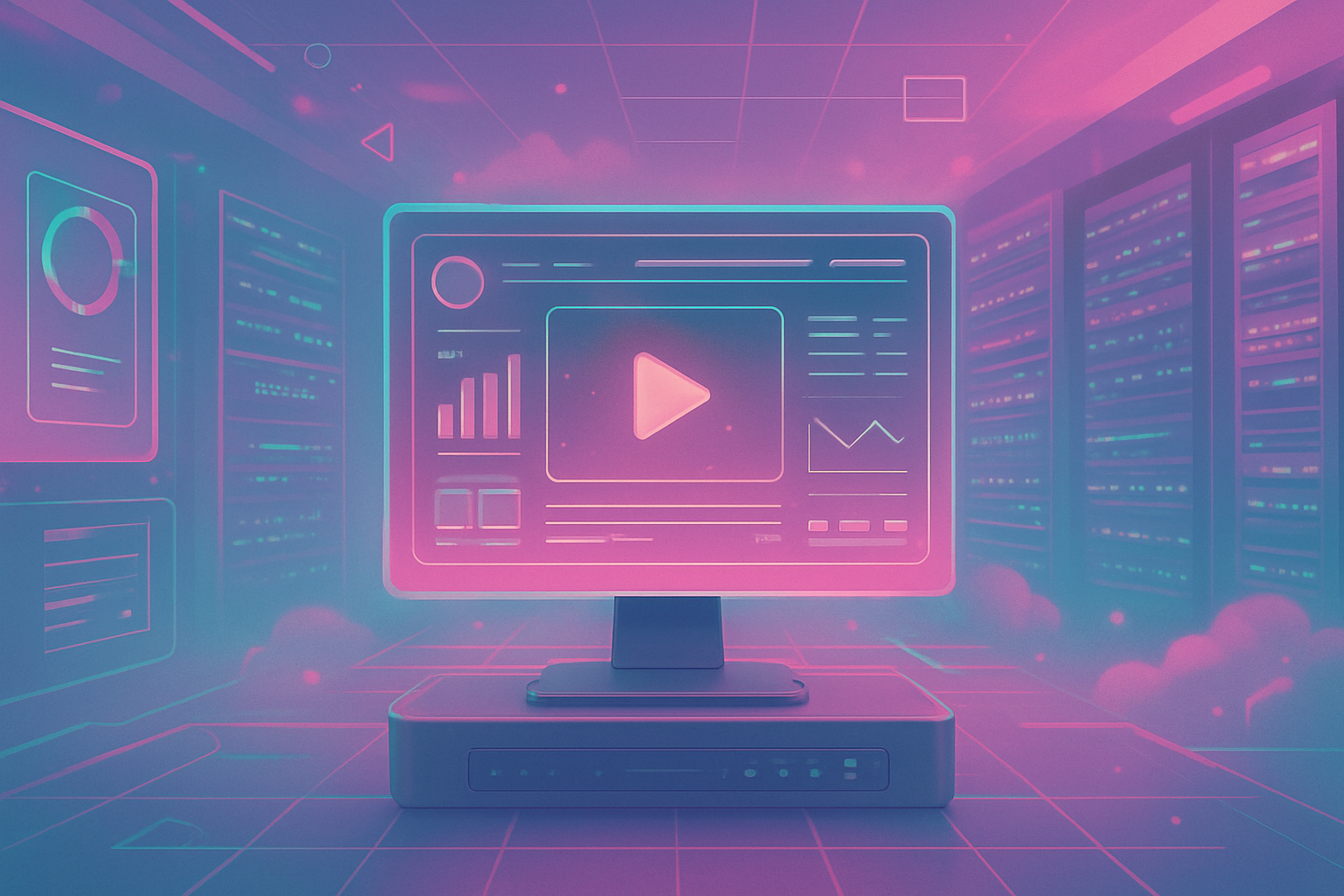
You've probably got a mess of digital content scattered everywhere: movies on an external hard drive, music on your laptop, photos on your phone, and TV shows buried in some folder you can never remember. Trying to watch that movie you downloaded last month means digging through files, copying it to another device, or worse—emailing it to yourself.
A media server solves this chaos. It's a centralized hub that stores all your content in one place and streams it to any device you own—your TV, phone, tablet, or computer. In this guide, you'll learn what media servers are, how they work, the different types available, and how to decide if one is right for you.
What Is a Media Server?
A media server is software that organizes your digital media library (movies, TV shows, music, photos) and makes it accessible to other devices on your network—or anywhere in the world via the internet. Instead of manually moving files between devices, the server does the heavy lifting: it stores the files, transcodes them if needed, and streams them to whatever you're watching on.
Think of it like Netflix, but for content you own. You're not limited to what's in some company's catalog. You decide what's in your library, and you control how it's organized and who can access it.
How Does Streaming Work?
When you press "play" on a media server, here's what happens behind the scenes:
- Request: Your device (the client) asks the server for a specific file
- Transcoding (if needed): The server converts the file to a format your device can handle
- Streaming: The server sends the video data in chunks over your network
- Playback: Your device plays the video as it receives it—no need to download the entire file first
This process uses streaming protocols like HTTP Live Streaming (HLS) or MPEG-DASH, which break videos into small segments that can be delivered efficiently even on slower connections.
Popular Media Server Software
There are several media server platforms to choose from, each with its own strengths. Here's a breakdown of the most popular options:
Plex
Plex is the most user-friendly option, especially for beginners. It automatically fetches metadata (posters, descriptions, ratings) for your content, organizes everything beautifully, and has apps for virtually every device.
Pros:
- Gorgeous interface with automatic metadata matching
- Free tier includes most features
- Remote access is easy to set up
- Supports live TV and DVR with additional hardware
Cons:
- Requires a Plex account (cloud dependency)
- Some advanced features require a Plex Pass subscription ($5/month)
- Privacy concerns since authentication goes through Plex's servers
Jellyfin
Jellyfin is the open-source alternative to Plex. No accounts, no subscriptions, no tracking—just your media and your server.
Pros:
- Completely free and open-source
- No cloud dependency or required accounts
- Full control over your data
- Active community developing plugins and features
Cons:
- Metadata matching isn't as polished as Plex
- Fewer client apps available
- Requires more technical knowledge to set up
Emby
Emby sits between Plex and Jellyfin. It's user-friendly like Plex but offers more control and privacy options.
Pros:
- Good metadata matching and organization
- DVR and live TV support
- Mobile sync for offline viewing
Cons:
- Premium features require Emby Premiere ($54/year)
- Smaller community than Plex
Comparison Table
| Feature | Plex | Jellyfin | Emby |
|---|---|---|---|
| Cost | Free (Premium: $5/mo) | Free | Free (Premium: $54/yr) |
| Open Source | No | Yes | No |
| Ease of Setup | Easy | Moderate | Easy |
| Metadata Quality | Excellent | Good | Good |
| Privacy | Cloud-dependent | Fully private | Optional cloud |
| Client Apps | Extensive | Growing | Moderate |
What You Need to Run a Media Server
Setting up a media server doesn't require a massive investment. Here's what you need:
Hardware
Minimum:
- A computer that stays on (old laptop, desktop, or Raspberry Pi 4)
- At least 2GB RAM (4GB+ recommended)
- Storage for your media (external hard drive or NAS)
Recommended:
- Dedicated mini PC or NAS device (Synology, QNAP)
- 8GB+ RAM for smooth transcoding
- Multiple hard drives for redundancy
CPU Considerations: If your devices can't play your video files natively, the server will need to transcode them. This is CPU-intensive, so a processor with hardware encoding support (Intel Quick Sync, NVIDIA NVENC) makes a huge difference.
Network
A wired Ethernet connection is ideal for the server. Wi-Fi works, but you might see buffering if you're streaming high-bitrate 4K content. For remote access, you'll need a decent upload speed from your internet provider—at least 10 Mbps for 1080p streaming.
Storage
Your storage needs depend on your library size:
- SD/720p content: ~1-2 GB per movie, ~200-500 MB per TV episode
- 1080p content: ~4-8 GB per movie, ~1-2 GB per TV episode
- 4K content: ~20-60 GB per movie, ~5-10 GB per TV episode
Start with what you have and expand as needed. External USB drives are fine for beginners, but a NAS (Network Attached Storage) offers better reliability and features like RAID for redundancy.
Setting Up Your First Media Server (Plex Example)
Let's walk through setting up Plex as an example. The process is similar for other platforms.
Step 1: Install the Server Software
- Download Plex Media Server from plex.tv
- Install it on your computer or NAS
- Create a free Plex account
Step 2: Organize Your Files
Plex works best when your files are organized properly. Use this structure:
/Media
  /Movies
    /The Matrix (1999)
      The Matrix (1999).mkv
    /Inception (2010)
      Inception (2010).mkv
  /TV Shows
    /Breaking Bad
      /Season 01
        Breaking Bad - S01E01.mkv
        Breaking Bad - S01E02.mkv
      /Season 02
        Breaking Bad - S02E01.mkv
Proper naming helps Plex automatically find the right metadata.
Step 3: Add Libraries
- Open Plex Web (http://localhost:32400/web)
- Click "Add Library"
- Choose the type (Movies, TV Shows, Music, Photos)
- Point it to your organized folders
- Let Plex scan and match your content
Step 4: Install Client Apps
Download the Plex app on your devices:
- Smart TVs (Samsung, LG, Roku, Apple TV)
- Mobile devices (iOS, Android)
- Game consoles (PlayStation, Xbox)
- Streaming sticks (Chromecast, Fire TV)
Step 5: Set Up Remote Access
In Plex settings, enable "Remote Access." Plex will handle port forwarding automatically if your router supports UPnP. If not, you'll need to manually forward port 32400 to your server's local IP address.
Transcoding: Why It Matters
Transcoding is the process of converting video files from one format to another on-the-fly. Here's why it happens:
- Your file is 4K, but you're watching on a phone that only needs 720p
- The video codec (HEVC/H.265) isn't supported by your older TV
- Your internet connection can't handle the full bitrate
When transcoding kicks in, your server's CPU (or GPU) re-encodes the video in real-time. This is hardware-intensive, which is why CPU choice matters.
Hardware vs. Software Transcoding
- Software transcoding: Uses CPU only. Slower, more power-hungry
- Hardware transcoding: Uses GPU (Intel Quick Sync, NVIDIA NVENC). Much faster and more efficient
Most modern CPUs and GPUs support hardware transcoding. Enable it in your media server settings for the best performance.
Security and Privacy Considerations
Running a media server accessible from the internet comes with risks. Here's how to stay safe:
Use Strong Passwords
Your media server account should have a unique, strong password. Enable two-factor authentication if available (Plex supports this).
Limit Remote Access
Only enable remote access if you actually need it. If you're just streaming within your home, keep it local-only.
Use a VPN
If you're accessing your server remotely, consider using a VPN (like Tailscale or WireGuard) instead of exposing it directly to the internet. This adds encryption and hides your home IP address.
Keep Software Updated
Media server software gets security patches regularly. Enable automatic updates or check manually every few weeks.
Common Issues and Solutions
Buffering During Playback
Causes:
- Weak Wi-Fi signal
- Server CPU maxed out from transcoding
- Slow internet upload speed (for remote streaming)
Solutions:
- Use Ethernet instead of Wi-Fi
- Enable hardware transcoding
- Lower the streaming quality in client settings
Metadata Not Matching
Causes:
- Files named incorrectly
- Obscure or foreign content not in metadata databases
Solutions:
- Follow proper naming conventions
- Manually match content in server settings
- Use tools like FileBot to batch-rename files
Remote Access Not Working
Causes:
- Router doesn't support UPnP
- ISP uses CGNAT (Carrier-Grade NAT)
- Firewall blocking connections
Solutions:
- Manually configure port forwarding in router
- Use a VPN solution like Tailscale
- Check if your ISP provides a public IP address
Advanced Features
Once you're comfortable with the basics, media servers offer powerful features:
Live TV and DVR
With a TV tuner (like HDHomeRun), Plex and Emby can record live TV and add it to your library. Watch and record over-the-air channels without a cable subscription.
Mobile Sync
Download content to your phone for offline viewing. Perfect for flights or commutes without internet.
User Management
Create separate accounts for family members with different access levels. Kids get a filtered library, while adults see everything.
Plugins and Integrations
Media servers support plugins for additional functionality:
- Subtitle downloaders (OpenSubtitles)
- Theme music players
- Intro/credit skippers
- Integration with smart home systems
Is a Media Server Right for You?
A media server makes sense if you:
- Have a large collection of digital media you want to access easily
- Stream to multiple devices regularly
- Want control over your content instead of relying on subscription services
- Enjoy tinkering with technology and self-hosting
It might not be worth it if you:
- Only have a handful of files
- Are happy with streaming services like Netflix and Spotify
- Don't have a computer that can stay on 24/7
- Prefer simplicity over customization
Conclusion: Your Media, Your Way
Media servers give you complete control over your digital content. Whether you choose Plex for its polish, Jellyfin for its privacy, or Emby for the middle ground, you'll never have to dig through folders or email files to yourself again. Your entire library is just a few clicks away on any device, anywhere.
If you're looking for a reliable way to store and access your media files remotely, services like SonicBit make this easy by combining seedbox capabilities with cloud storage and one-click app deployment. You can deploy Plex, Jellyfin, or any media server with a single click, skip the technical setup, and start streaming immediately. SonicBit handles the infrastructure—Docker containers, HTTPS certificates, and reverse proxy configuration—so you can focus on enjoying your content.
Sign up free at SonicBit.net and get 4GB storage. Download our app on Android and iOS to access your seedbox on the go.
Put it into practice — cloud storage with one-click apps and a built-in seedbox.
START FREE — 4 GB